Our Story
Hey There!
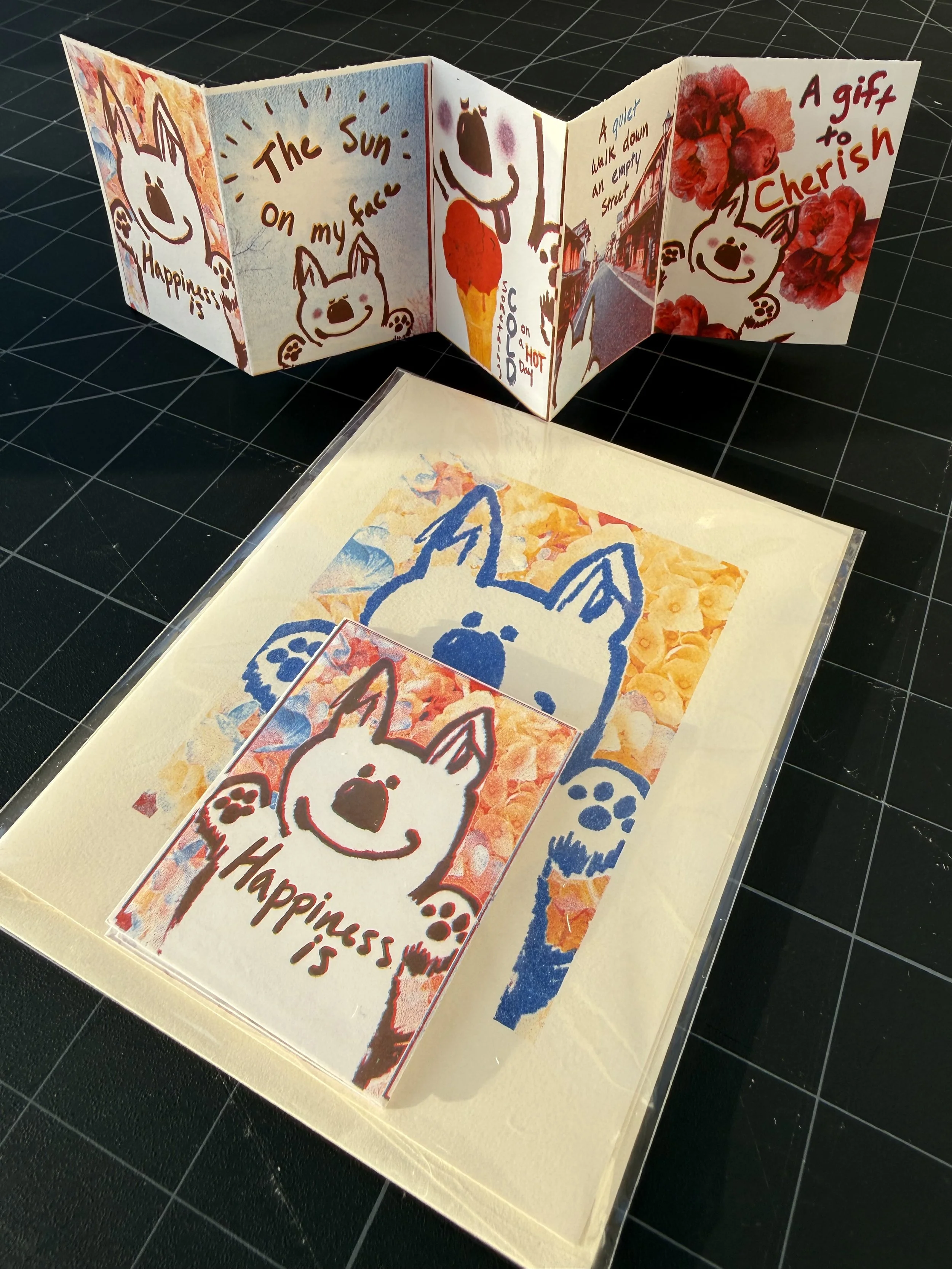
Thanks for checking us out! Founded in 2025 and based in San Francisco's Potrero Hill, Ariso SF is dedicated to making original and accessible artwork that is environmentally low-impact. Our products are made in a “slow” fashion vs. mass produced. Risograph, Cyanotype, and Screen printing are common production methods we use. Fabric, sewing, and Sashiko may also be incorporated into pieces. Our goal is put a little transferable joy into our pieces and send them out into the world. If you bought a piece , thank you! And if you haven’t, thank you for taking a look!
You can find our products on sale here or at the San Francisco Center for. the Book store starting in late July 2026. Much of our work is based on the following:
Risograph:
A cornerstone of our print studio is the Risograph. Originally released by the Riso Kagaku Corporation in 1980, this process functions like a digital screen printer, utilizing non-toxic, soy-based inks and minimal energy that can produce dreamy nostalgic images, as well as very bright and saturated prints. While the look and feel of the prints can be very different, the images are based on a set number of unique colors. We often identify the color choices in our work. Risograph prints have a unique look and feel vs. standard printing processes that can be hard to describe, but easier to identify when looking at a print.
Aside from using soy based inks and rice paper screens, the Risograph uses an entirely heatless process. The ink dries on the paper vs. being fused to the paper with high-heat lamps or plastic toners.
As a testament to this eco-friendly, energy-efficient method, you may occasionally notice slight, subtle traces of ink on the reverse side of certain pieces. Once dry, the plant-based ink is stable, and these minor variations serve as a beautiful hallmark of a truly analog, sustainable printing process.
Cyanotype:
Cyanotype is a photographic process that relies entirely on sunlight and water to create art. Images are made visible using two non-toxic mineral compounds—ferric ammonium citrate and potassium ferricyanide. We create images by exposing paper or fabric treated with the solution to sunlight or UV light. We often use a UV light and pre treated fabric to eliminate shadows and create a more consistent exposure. We find fabric creates a much deeper shade of blue, mimicking the look of Indigo dying. Water is used to rinse off the chemical, revealing the image. Seeing the fabric in a bath of water reminds me of developing photographic paper in a darkroom. The images slowly come into view and the exposed portions to UV light become a deep blue. Each Cyanotype piece is unique as each is uniquely exposed to light.
Sewing and Sashiko:
Given our inclination to produce Cyanotype prints on fabric, it was very natural to want to include sewing and Sashiko into our pieces. Sashiko is the Japanese art of hand stitching. Sashiko translates as “little stabs” into fabric. Sashiko was borne out of necessity in rural communities as a way to mend and strengthen fabric.
Screen printing:
Screen printing is performed using a traditional stencil-based method where ink is physically pressed through a fine mesh screen onto a surface.